
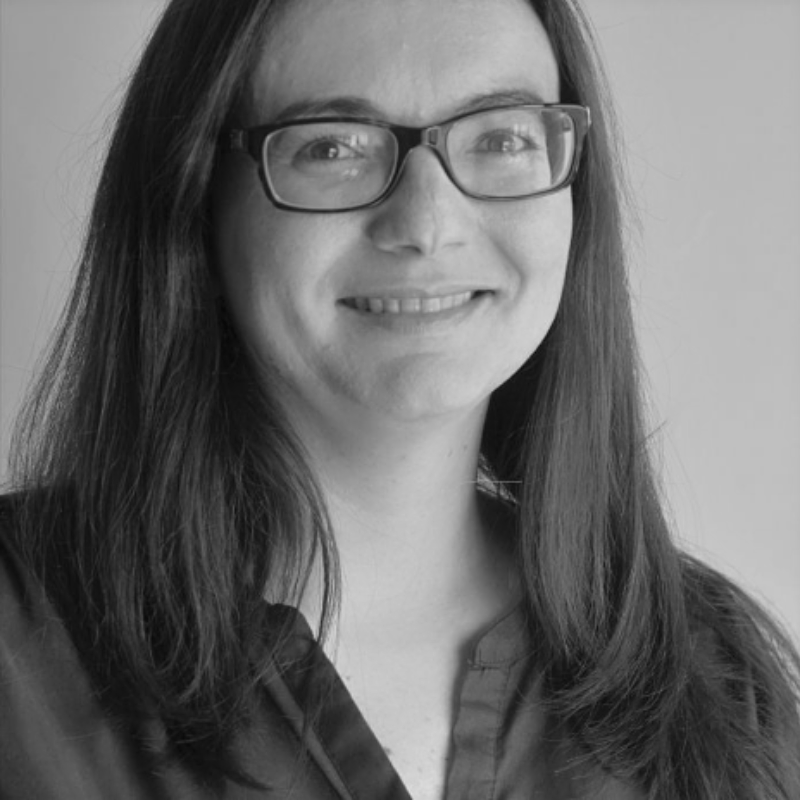
Sandra Bastos
Co-founder and director of “Da Capo” — Portuguese Music Magazine
Participated in the 2018 edition
Sandra Bastos is a Portuguese journalist, cultural promoter, and teacher who has made a name for herself on the national scene as the co-founder and director of Da Capo - Revista Musical Portuguesa, the first large-scale digital publishing project entirely dedicated to promoting classical music in the country. Born with a strong connection to the arts, she has developed over the years a multidisciplinary career focused on the intersection of music, education, and cultural journalism.
Her academic and musical training reflects this integrated path. Sandra Bastos began her formal musical training by studying French horn at the Calouste Gulbenkian Conservatory of Music, as part of the class of 2006. Later, she expanded her academic studies at the University of Minho, where she earned a bachelor’s degree in Mass Communication with a specialization in Journalism. To complement her training in education and research, she attended the Santarém School of Education and, more recently, the School of Education and Social Sciences (ESECS) at the Polytechnic Institute of Leiria.
Currently, Sandra Bastos maintains a dynamic professional routine divided between the public education sector, specialized journalism, and social work. In the field of education, she works as a teacher under the supervision of the Portuguese Ministry of Education, building on her previous experience in music programming and cultural production projects in Porto. At the same time, he continues to serve as editor-in-chief of Da Capo magazine, a project he founded in 2013 together with his late brother, the renowned oboist Samuel Bastos. At the magazine, he coordinates the planning of journalistic coverage, manages sections on arts education, and conducts in-depth interviews with national and international musicians. His activities also extend to community outreach, as he actively collaborates as a social worker at Atelier Outeirinho. Through this fusion of music, the classroom, and the newsroom, he remains an active figure in the preservation and promotion of Portugal’s musical heritage.